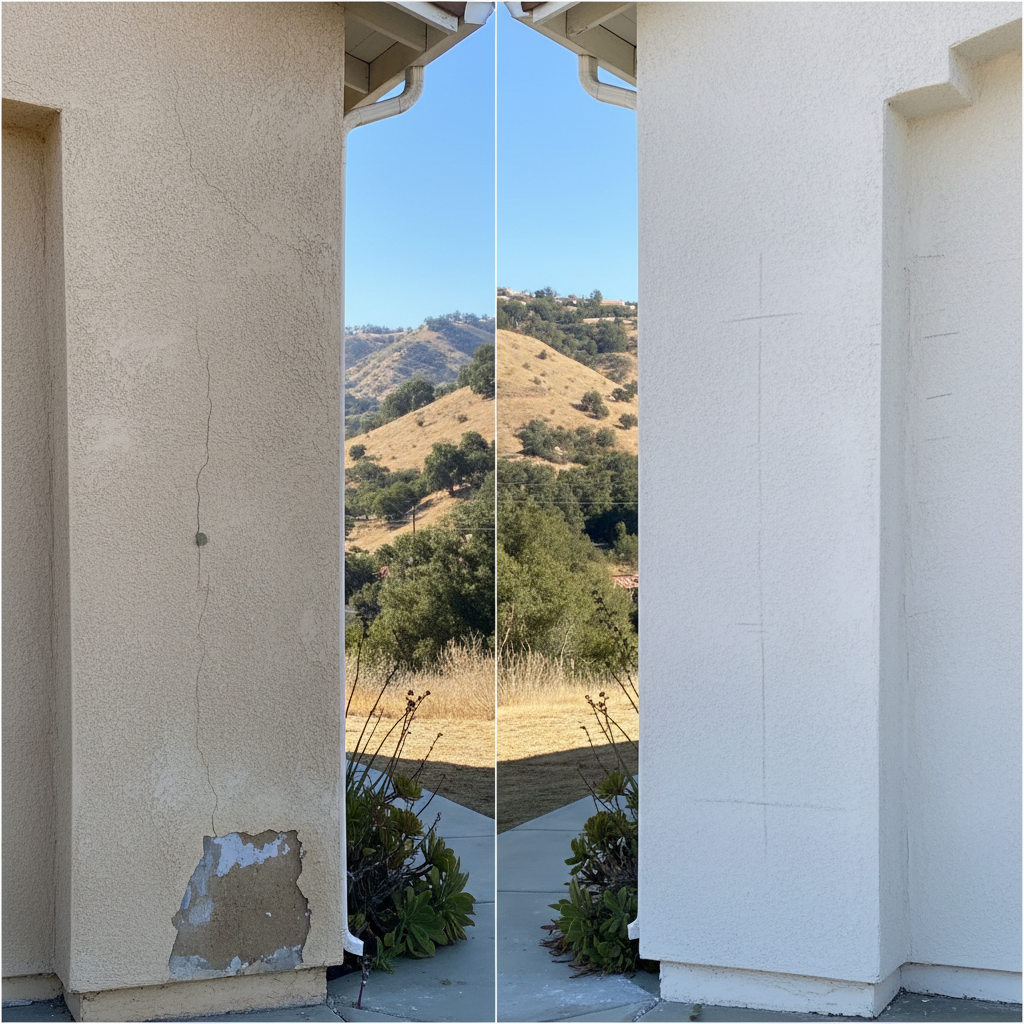
So, you're thinking about getting your stucco checked out. Good call. Especially with our Santa Clarita weather – those hot, dry summers and occasional heavy rains can really put stucco through its paces. When it comes to inspections, you've generally got two main ways to go: a visual inspection or an invasive one. Both have their place, but they're pretty different in what they tell you and what they cost.
Visual Stucco Inspection: The Quick Look
A visual inspection is exactly what it sounds like. I, or another experienced pro, will walk around your house, looking at the stucco surface with a trained eye. We're checking for obvious cracks, discoloration, bulging, water stains, efflorescence (those white powdery deposits), or any areas that just don't look right. We'll pay close attention to common problem spots: around windows, doors, rooflines, penetrations like pipes or vents, and where the stucco meets the ground. We'll also use a moisture meter on the surface to see if there are any obvious wet spots.
Pros of Visual Inspections:
- Cost-Effective: This is definitely the cheaper option. It takes less time and doesn't require any destructive work.
- Non-Invasive: No holes in your walls, no repairs needed afterward. It's clean and simple.
- Good for Routine Checks: If you're just doing an annual check-up or you're pretty sure you don't have major issues but want peace of mind, a visual inspection is a solid first step. It can catch surface-level problems before they get worse.
Cons of Visual Inspections:
- Limited Scope: This is the big one. A visual inspection can only tell you what's happening on the surface. It can't see behind the stucco. You might have serious moisture damage or rot happening in the wall cavity that shows no external signs yet.
- Relies on Experience: The quality of the inspection heavily depends on the inspector's experience and ability to spot subtle clues.
- Doesn't Confirm Hidden Damage: If I see a suspicious crack, I can tell you it's a potential problem, but I can't tell you for sure what's going on underneath without opening it up.
Invasive Stucco Inspection: Getting to the Root of It
An invasive inspection, sometimes called a destructive inspection, is a much more thorough approach. This is where we actually make small, strategic cuts or drill holes in your stucco to get a look at the underlying structure. We'll use borescopes (small cameras) to peer into the wall cavity and take moisture readings directly from the sheathing and framing.
Pros of Invasive Inspections:
- Comprehensive: This is the only way to truly know what's happening behind your stucco. It can identify hidden water intrusion, rot, mold, and structural damage that a visual inspection would completely miss.
- Definitive Answers: If you suspect a major problem, an invasive inspection will confirm it and show you the extent of the damage. This is crucial for insurance claims or for buying/selling a home where stucco integrity is a concern.
- Pinpoints Repair Needs: By seeing the actual damage, we can give you a much more accurate estimate for repairs, because we're not just guessing.
Cons of Invasive Inspections:
- Higher Cost: Naturally, this costs more. It's more time-consuming, requires specialized tools, and involves patching the small holes or cuts afterward.
- Destructive: You'll have small, patched areas on your stucco. A good contractor like us at Santa Clarita Stucco & Plastering will make these patches blend in as much as possible, but they're still there.
- Time-Consuming: It takes longer to perform and then to repair the inspection points.
Which One Should You Choose for Your Santa Clarita Home?
Here's my honest take. For most homeowners in areas like Stevenson Ranch or Valencia, especially with houses built in the last 20-30 years, an annual visual inspection is a smart move. It's like your regular dental check-up. You catch small issues before they become big, expensive problems. Our dry climate here means stucco generally holds up well, but those rainy seasons can still cause trouble if water gets in.
However, there are definitely times when you absolutely need an invasive inspection:
- Buying or Selling a Home: If you're buying, don't skip this. You don't want to inherit someone else's hidden water damage nightmare. If you're selling and a visual inspection raises red flags, getting an invasive one done proactively can save you headaches later.
- Persistent Problems: If you've had recurring leaks, mold smells, or visual signs that just won't go away after surface repairs, it's time to go deeper.
- After Major Weather Events: If we get one of those crazy El Niño years with prolonged heavy rain, and you're worried, an invasive check might be warranted.
- Older Homes: Especially if your home is older and hasn't had regular stucco maintenance, an invasive inspection is a very good idea.
Ultimately, a visual inspection is a great preventative measure and a good starting point. But if there's any real suspicion of hidden damage, or if you need definitive answers, you've got to go invasive. It's an investment, but it's one that can save you tens of thousands of dollars in major repairs down the line by catching problems early. Don't gamble with your home's integrity.